A course for children and teens · ages 6–18

AI Prodigies

12 lessons · 3 age tracks · 6 blocks

We teach children to think together with AI: set the task, check the answer and carry an idea through to their own project — a fairy tale, a cartoon, a bot or a piece of research. Every lesson ends with a finished piece of work.

Thinking First.
AI Second.

magnaqore.io/ai-prodigies
12lessons in 6 blocks, each with a finished piece of work
3age tracks: 6–7, 8–10 and 12–18
≤ 15kids per group; up to 6 for ages 6–7
1own project, defended in front of parents
+3lessons for ages 16–18: exams, career, portfolio
2languages of materials: English and Russian
Approach

Thinking, not buttons

AI amplifies people who know how to think and doesn’t rescue those who don’t. So before any tools, we teach thinking: how to break a task down, what to hand to the machine and how to check the answer.

The tools will change within a year. The ability to set a task, spot a mistake and carry an idea through to a result will stay.

AnimationLesson 3 “My task map”: a child sorts their tasks into three boxes and splits a tricky one into a part for AI and a part for themselves.
After the course

What a child can do on their own

  • 01

    Writes a prompt that gets the intended result — and improves it when the result isn’t right

  • 02

    Sorts tasks into three groups: I do it myself · I do it with AI · I never give it to AI

  • 03

    Doesn’t take AI at its word and knows three ways to check: the textbook, sources, a second AI

  • 04

    Makes text, pictures, a song and a short video with AI — and puts them together into one story

  • 05

    Builds a personal “School AI Kit” with a clear line between learning and copying

  • 06

    Defends their own project: what they did, why, which robots helped and what they learned

Who it’s for

One course, three ages

The lesson topics are shared; the delivery is not. A six-year-old dictates out loud while a grown-up types; a teenager works alone and builds a real bot or a piece of research.

AnimationThe same 12 lessons in three tracks: who sits at the keyboard, how long the lesson is, the group size and the final project.
6–7years

Explorers

Games, cards and movement. The child speaks, a grown-up types. Project: a fairy tale with pictures and a song.

30 minutes · up to 6 kids
8–10years

Creators

Templates and examples, work by model. The child is at the keyboard, a grown-up nearby. Project: a cartoon or a comic.

45 minutes · up to 10 kids
12–18years

Builders

Case reviews and independent work. Project: research, a bot, an automation or a media project.

60–75 minutes · up to 15 kids
Age 11?We teach them with the 12–14 group: the pace and logic fit. With no computer experience, the 8–10 group is a better start.
How it works

First, understand how a machine learns

Show a toddler an apple 20 times and on the 21st they’ll pick it out from other fruit. AI is the same: it learns from examples. Good examples give good results; bad ones give confident mistakes.

That’s how the first lesson starts. From then on a child neither fears AI nor trusts it blindly — they understand where its answers come from.

AnimationBeep the robot learns to recognise an apple from examples — and gets confused when pears are labelled “apple”.
How the course works

Games, a project and a defense in front of parents

Every lesson ends with a finished piece of work, every block with a result you can show at home, and the course with the child’s own project.

AnimationA sample game: every level is one skill; a precise prompt earns experience points and a badge.
Gamification

Games where kids learn AI

We build learning games for the course, for schools, camps and company events. The child doesn’t sit through a lecture about AI — they play through levels and pick up a skill on the way.

  • “Teach the robot” — collect examples and see how accuracy depends on them.
  • “Prompt quest” — the tower’s floors open only for a precise prompt.
  • “Catch the mistake” — levels full of AI fabrications, against the clock.
  • “World director” — change a world with one phrase and learn to put things into words.
AnimationLessons 9–12: a team of robots builds a cartoon from the child’s idea — and the child defends it in front of their parents.
Project

Four lessons for their own project

  • Lesson9

    A team of robots and the idea

    You → text robot → picture robot → video robot. Project passport: topic, audience, steps, deadline.

  • Lesson10

    Building

    The project is 80% done. We learn to fix typical snags: the style “drifts”, the AI made up a fact.

  • Lesson11

    Defense rehearsal

    Pair reviews and a portfolio with all the work from the course.

  • Lesson12

    Defense and careers of the future

    A presentation in front of parents, certificates and a talk about what stays human in any job.

Schedule

For a school, a family, a camp or a company

Option 112 weeks

Once a week — a steady pace across a school term.

Option 26 weeks

Twice a week — the same program, faster.

Option 36 days

A holiday intensive camp: two lessons a day and a project at the end.

School or clubMixed group 8–14Child + parentOne-to-oneFestival standEmployees’ children
Experience with children

We already teach kids AI — at festivals, in companies and in class

AnimationHow it worked at the stand: a child describes a world, the AI draws it, then one phrase changes it — night, snow, a whale in the sky.
Minsk · 5–6 September 2026

Science Festival — National Academy of Sciences of Belarus

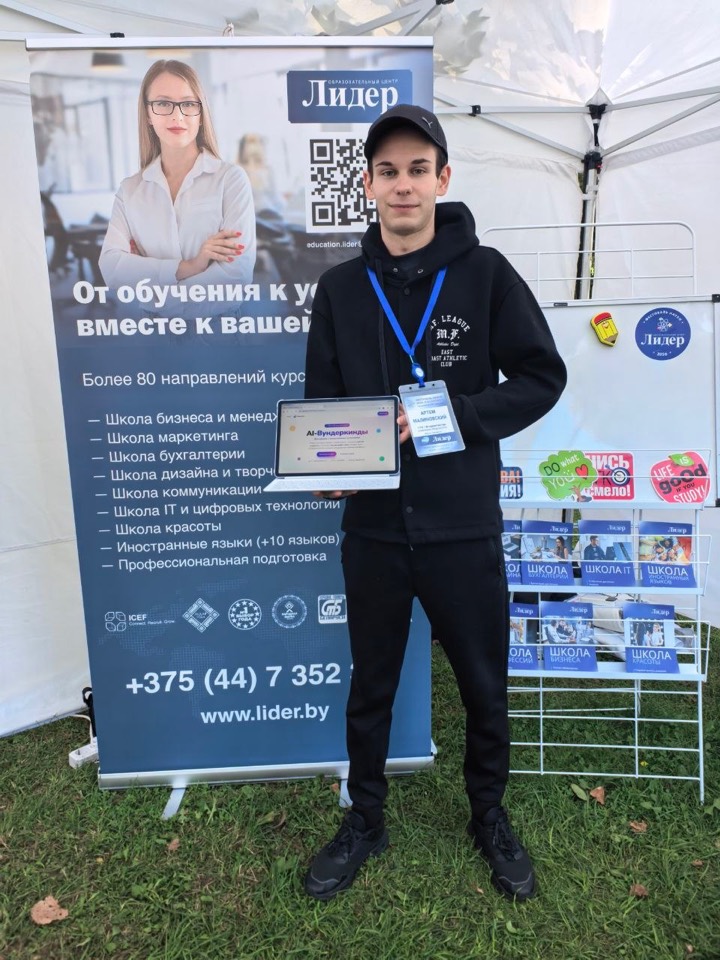
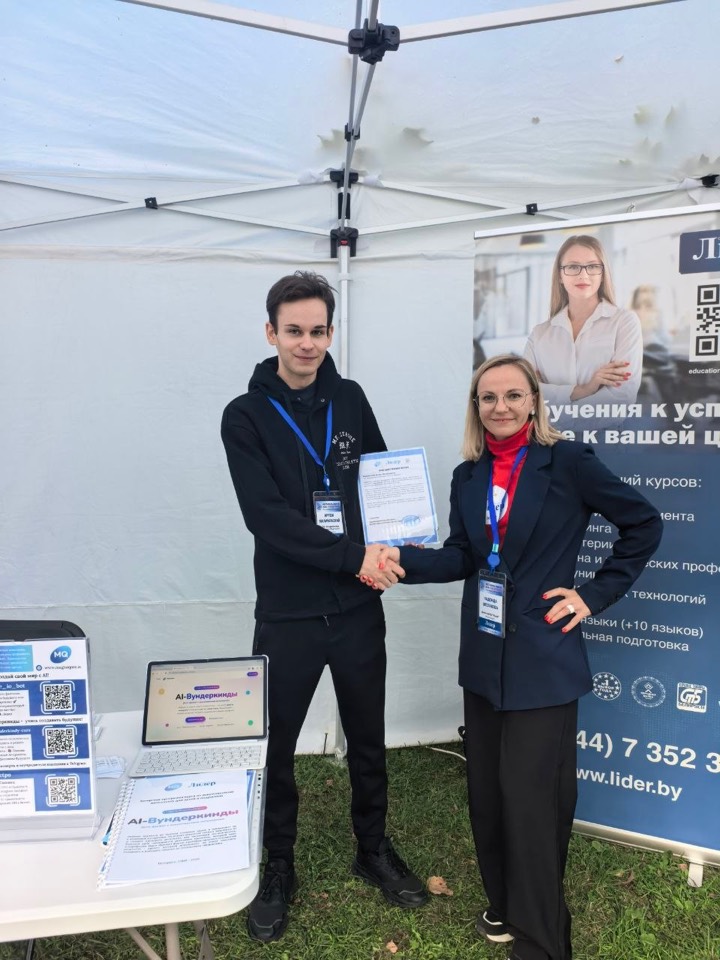
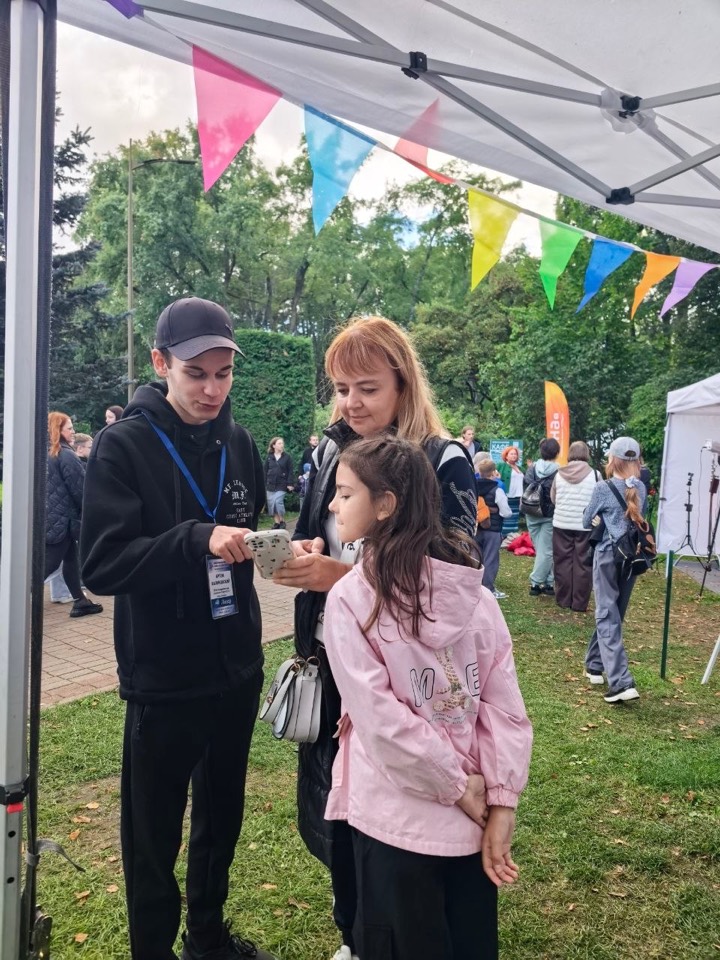
Together with the Leader Educational Center we ran AI activities for children and parents at the Science Festival organized by the National Academy of Sciences of Belarus.

  • “Create your own universe” — a mini-session on a tablet: learn to write a prompt and generate a world, from a city in the clouds to a space station.
  • “You’re the director: change the world with one phrase” — change the weather, heroes and style in real time. A mini-contest for the most creative world.
  • The “Careers of the Future” AI bot — a child sees themselves in the career they choose.
Organizer — National Academy of SciencesWith the Leader Educational CenterLetter of appreciation
Recorded at the festival: the careers bot
A girl at the stand sees herself in a career of the future
The careers AI bot at the stand
The MagnaQore and Leader Educational Center stand at the Science Festival
MagnaQore × Leader stand
Letter of appreciation from the Leader Educational Center
Letter of appreciation from Leader
AnimationA photo, a choice of career — and the child sees themselves as a space biologist, next to what a human does in that job and what the AI does.
App

The “Careers of the Future” AI bot

A child takes a photo, picks a career and a few seconds later sees themselves in it — for example, as a space biologist in a spacesuit.

The picture is only the way into the conversation. Then we explain the main thing: what goes first is not jobs but tasks within them. So it matters to understand what a human does in the job and why a machine can’t do it.
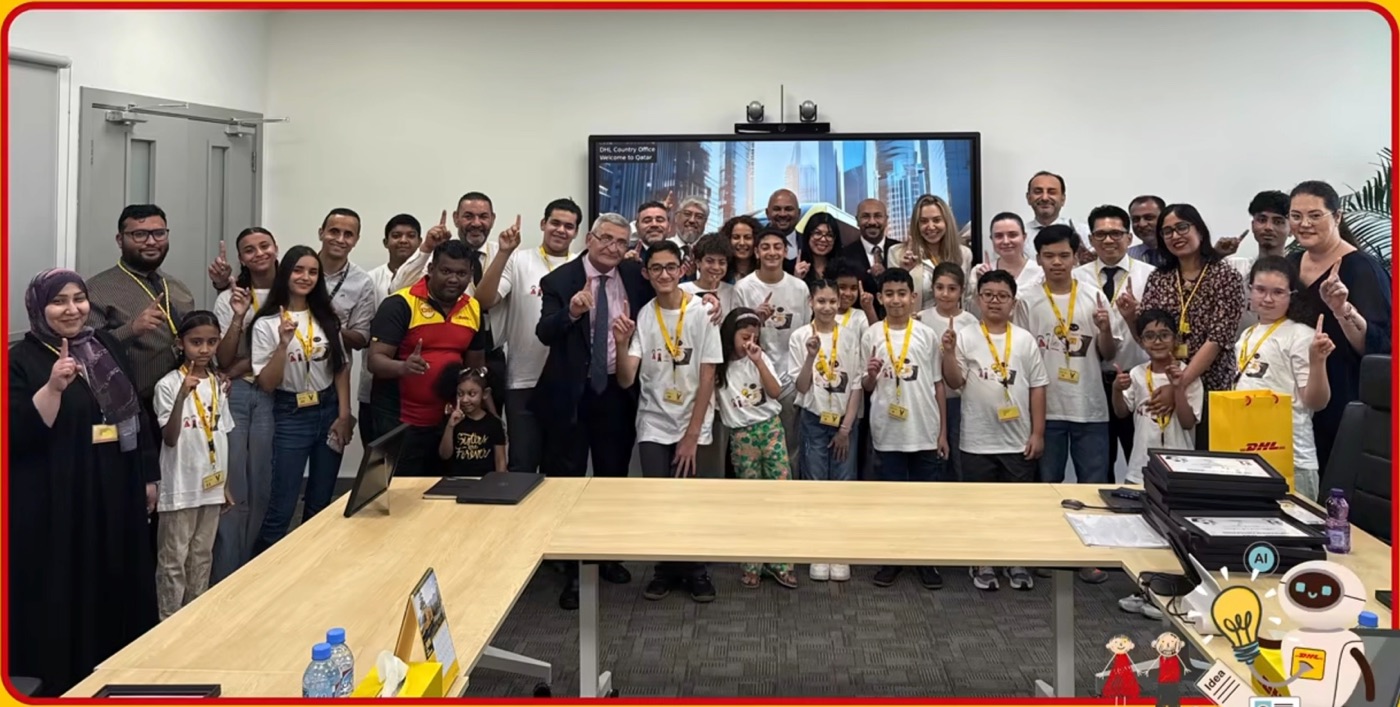
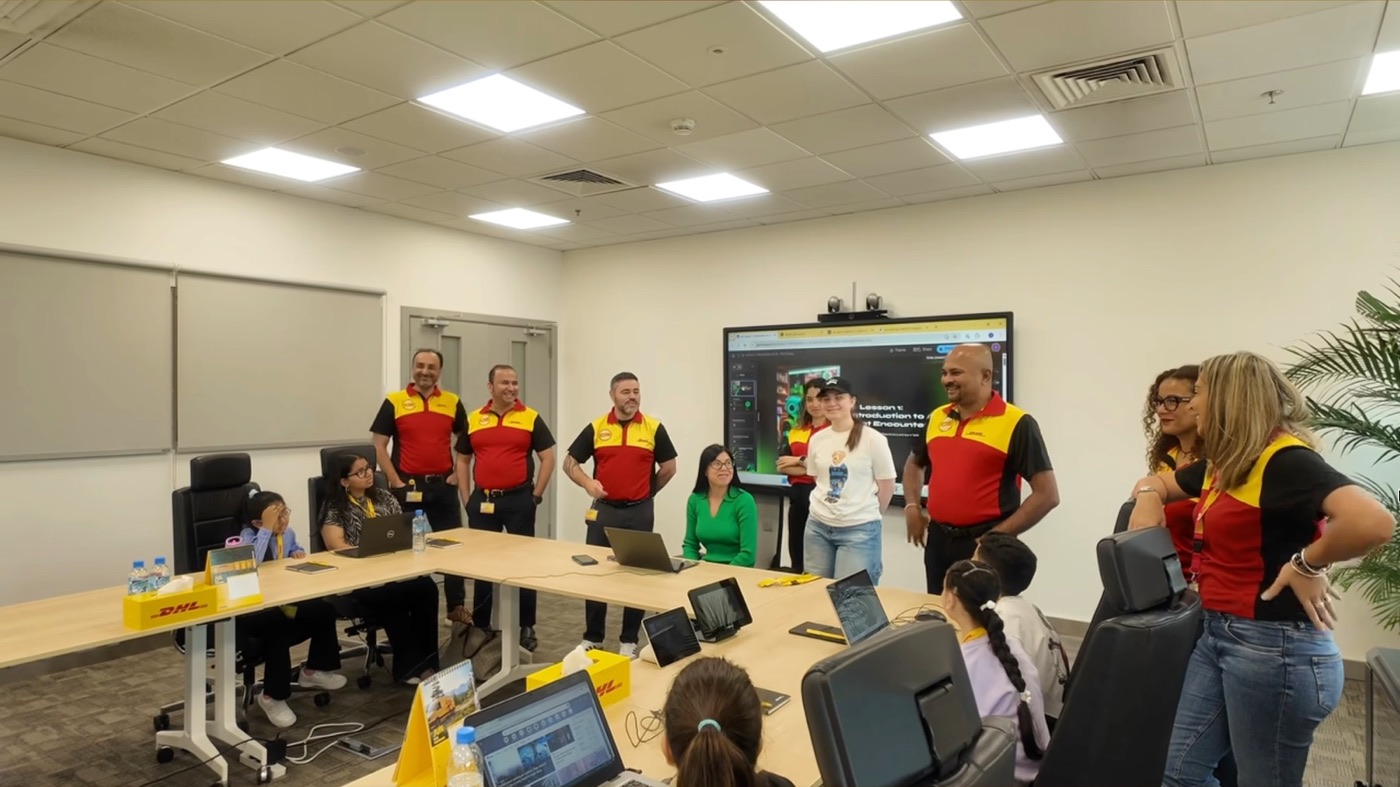
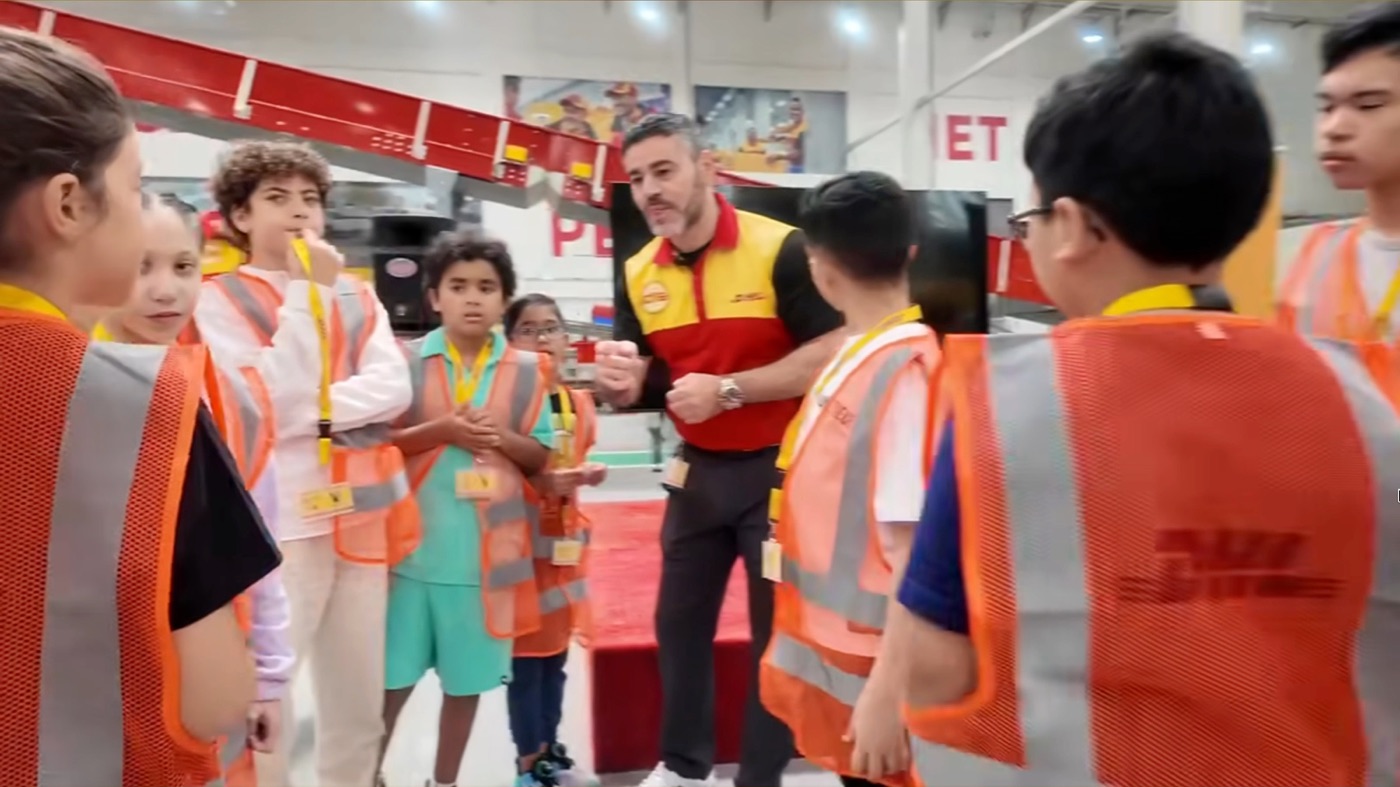
Graduation Day at DHL Express Qatar: children with certificates The “Meet AI” lesson for DHL employees’ children A tour of the DHL hub
Doha · DHL Express Qatar

Smart Kids, Smarter Futures

A children’s program for the families of DHL Express Qatar employees: from a first meeting with artificial intelligence to their own project and a graduation at the company’s office.

  • The “Meet AI” lesson — the same session that opens AI Prodigies.
  • A tour of the hub — how logistics works together with automation.
  • A project with AI — videos with AI avatars and generated characters.
  • Graduation Day — project presentations, certificates and a group photo with the DHL team.
Minsk · Leader Educational Center

The AI Prodigies course

A joint course for children aged 6–18: 12 lessons, 3 age tracks, a final project, a portfolio and a certificate.

lider.by/ai-vunderkindy-curs (in Russian)
MagnaQore · team

Internships at our agency

School and university students intern with us: they work alongside the team on real tasks, with a mentor, and leave with a real case for their portfolio rather than a classroom exercise.

Ages 15–18 and studentsA mentorA portfolio case
MagnaQore in the AI industry
Web Summit QatarAn AI workshop together with Qatar Development Bank
CIO Global SummitQatar Edition — a talk by our team
UN AI programProgram trainer; mentors at QDB and Scale7 hackathons
Ulster UniversityWe teach at the university — the student track
Demo lessons

Two lessons as 2D recaps

Lesson 2 “The language of robots: prompts” and Lesson 4 “Checking: AI makes mistakes”, each as a short animated recap: what the lesson covers, what the kids do and what work it leaves behind.

magnaqore.io/ai-prodigies/demo
Course program

12 lessons · 6 blocks

Open any lesson: what happens in class for each age, the homework and how it connects to school.

Work after the lessonHomeworkSchool linkHas a 2D recap
What the child keeps

12 pieces of work, a project and a portfolio

Every lesson leaves a finished piece of work. By the end of the course they add up to a portfolio, with the child’s own project at its center.

Safe and honest

Rules that hang on the wall

Most AI services are designed for users aged 13 and up. So the youngest work only through the teacher’s screen or a learning account, and the rules are discussed in the first lesson and repeated in the fourth.

Ages 6–7 · 4 rules
    Ages 8–18 · 7 rules
      Parents’ questions

      What parents ask most often

      Won’t my child forget how to think for themselves?

      Quite the opposite — a whole block of the program is built on this. Children learn to sort tasks into three groups: I do it myself because I’m learning; I do it with AI because it speeds things up; I never hand it to AI. A separate lesson is about AI making mistakes and three ways to check its answer.

      Isn’t this a way to learn how to cheat?

      The rule is set in the very first lesson: tasks that test a child’s own knowledge are done without AI, and if AI helped, they say so openly. We teach children to use AI as a tutor who explains, not as someone who hands in the work for them.

      My child is six and can’t read yet. Isn’t it too early?

      Not if the format is right. At six, a child doesn’t type or sit alone with a service: they say out loud what they want, and a grown-up types it in. The lesson lasts 30 minutes, in a group of up to six, through games and cards. The main thing they learn is to put what they imagine into precise words.

      Is this preparation for becoming a programmer?

      No. It’s preparation for any career. A child who has learned to set a task and check the result will use that in medicine, design and business alike.

      What if all these tools change in a year?

      They certainly will. That’s why the program is built not around specific tools but around skills: setting a task, breaking it into steps, checking the answer and carrying an idea through to a result.

      AI Prodigies · MagnaQore

      Thinking First.
      AI Second.

      12 lessons · 3 age tracks · groups of up to 6, 10 and 15 kids · their own project, a portfolio and a certificate. Ready-made materials in English and Russian.

      ina.nistoras@magnaqore.io · +375 44 735-23-52 · magnaqore.io